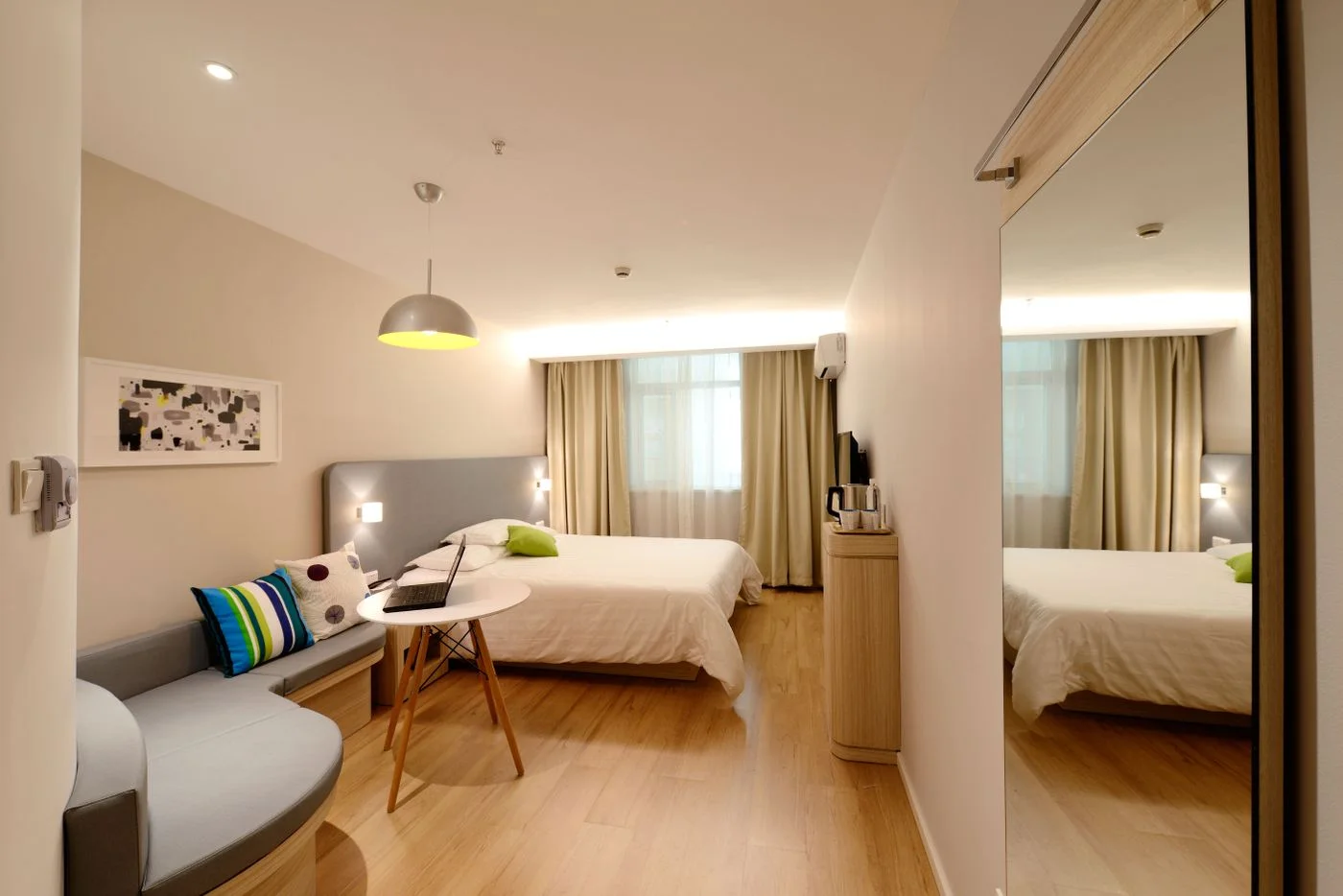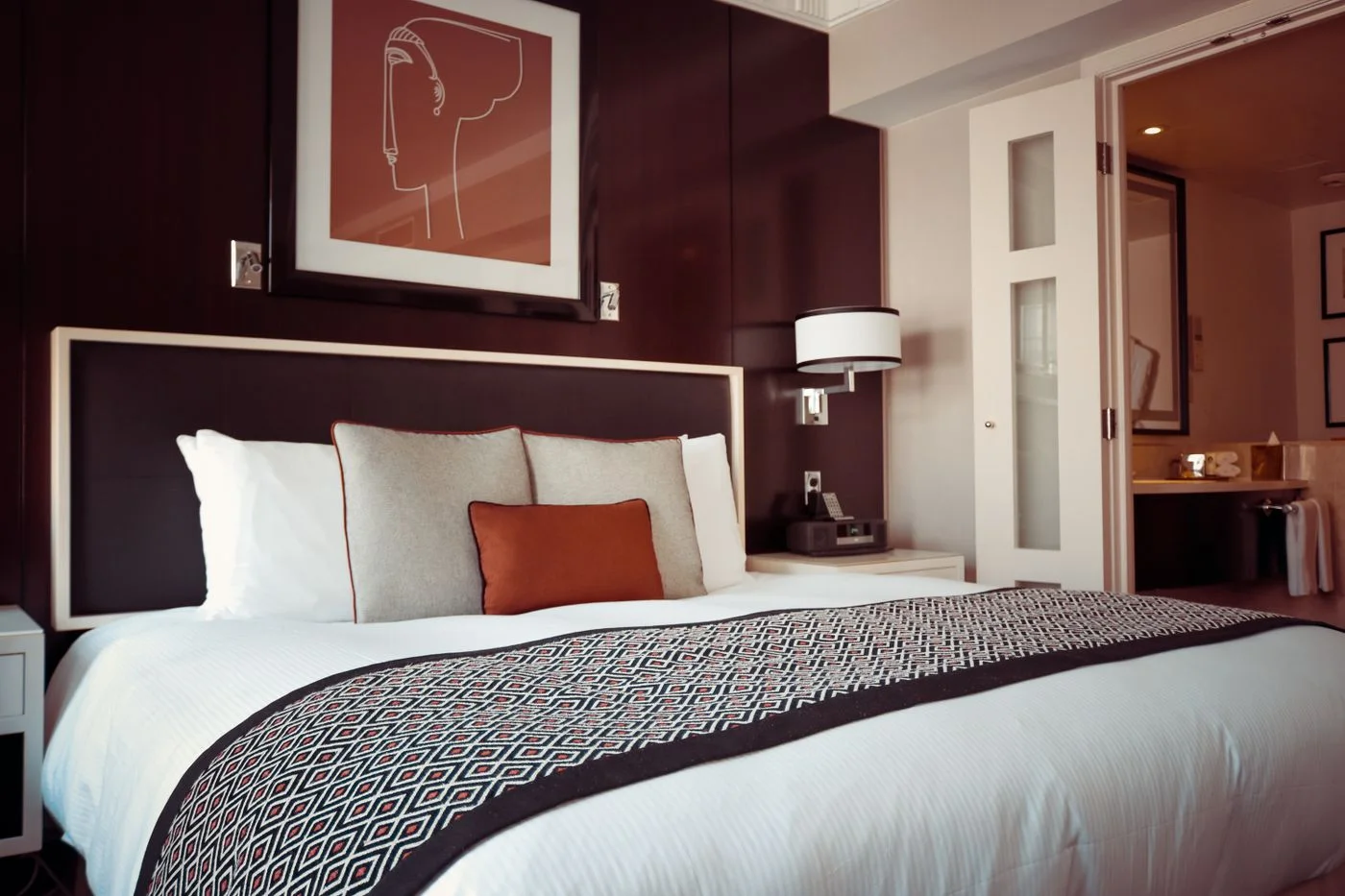
The bedside table is small enough to be bought as an afterthought, yet it carries a surprisingly personal collection of things: a lamp, water, glasses, a book and whatever needs to remain within reach overnight. Picture a narrow bedroom where the wardrobe opens beside the bed and one person gets up earlier than the other. Matching tables may look balanced in a photograph but fail the daily routine. Choose each bedside position around its user, the mattress height and the route beside the bed. A useful surface does more for comfort than a decorative pair that cannot hold what is needed.
In this guide
Measure beside the mattress you actually useDecide what belongs on topCompare drawers with open shelvesConsider floating furniture carefullyAllow the two sides to differCompare your optionsBefore you buyCommon questionsMeasure beside the mattress you actually use
Start with the top of the mattress, not the bed frame. The convenient table height depends on how you reach from your normal position and what you keep on the surface. Try a temporary stable surface at different heights before ordering. A table far below a tall mattress can be awkward to reach, while a high cabinet may make it difficult to see small objects from bed.
Measure the available width and depth with doors and drawers open. A table may fit neatly into the corner but block a wardrobe or reduce the route around the bed. Include projecting knobs, skirting boards and curtain fabric. If one side is constrained, a narrower table or a suitable wall-mounted option may work better than forcing symmetry. Keep the walking route usable and avoid sharp projecting corners where people pass in the dark.
Decide what belongs on top
Lay out the actual bedside items on a sheet of paper. Include the base of the lamp, a drinking glass and the largest book normally kept there. This simple exercise reveals whether a surface that looks generous online is genuinely large enough. If everything overlaps, either choose more space or move one function elsewhere. A properly installed wall light may free a surface, but it brings its own fitting requirements.
Consider charging separately. Check access to sockets and whether cables can be routed without being trapped or creating loose loops beside the bed. A table with built-in charging features may appeal, but compare compatibility, instructions and the ease of replacing electrical components. Ordinary furniture with a sensible cable route can be more adaptable. Do not conceal charging devices under bedding or inside unsuitable enclosed spaces; follow the device manufacturer's guidance.
Compare drawers with open shelves
A drawer can hide small items and help the room feel calm, especially when the bedroom doubles as a dressing area. Check internal dimensions and how far it opens. A shallow drawer that barely holds glasses may not suit a notebook and several chargers. Look for a mechanism that feels appropriate for frequent use, and ask whether assembly affects its alignment. Do not assume every drawer shown in a photograph is equally accessible.
Open shelves make books easy to see and reach, but they leave contents on display and collect dust. They can work well when you keep a small, stable collection. If the shelf will simply hold a basket of tangled cables, a drawer may suit the routine better. A combination of one drawer and an open shelf offers flexibility, although the overall footprint still needs to fit. Choose storage for the contents rather than buying capacity you will fill by default.
Consider floating furniture carefully
A wall-mounted shelf or cabinet can reveal more floor and avoid legs in a narrow space. It also requires appropriate wall construction, fixings and installation. Confirm the load limit and mounting instructions, including the weight of the furniture itself and everything placed on it. If you rent, establish permission before ordering. A floating design is only a useful space saver when it can be installed securely at the needed height.
An alternative is a compact freestanding stool or table, provided it is stable and suitable for the job. It may be easy to move but offers little concealed storage. A larger chest beside the bed can serve two purposes in a constrained room, although its height and drawer clearance must work. Measure carefully before assuming multifunctional furniture automatically saves space. It may simply transfer the obstruction to another part of the room.
Allow the two sides to differ
Shared bedrooms do not always need identical tables. One person may read paper books while the other wants a clear surface and water. You can create connection through a related finish, similar visual weight or complementary lamps. Different widths can be particularly useful when the bed sits off-centre or one side meets a chimney breast. Judge the whole composition with the bedding in place rather than focusing on table symmetry alone.
Prioritise stable construction, practical surfaces and clear care instructions over intricate decoration. Bedside furniture sees water glasses, frequent wiping and objects placed down without much attention. Check the finish's care requirements and use suitable protection where recommended. Before purchasing, compare delivery, assembly and returns alongside the price. A modest table that makes the nightly routine easier will usually be a stronger choice than a larger piece bought simply to complete a matching bedroom range.
Compare your options
| Option | Best for | The trade-off |
|---|---|---|
| Drawer bedside table | Small items that need concealed storage | Requires clearance for opening |
| Open shelf table | A small collection of books | Contents remain visible and need dusting |
| Wall-mounted cabinet | A narrow floor area with suitable walls | Installation and load limits need checking |
Before you buy
- Measure from the actual mattress height.
- Lay out the items that need surface space.
- Check wardrobe and drawer movement.
- Plan safe access to charging sockets.
- Confirm wall suitability for mounted furniture.
Common questions
Must bedside tables match the bed?
No. Related colour or material can create a coherent arrangement without a matching range. Check practical height and scale first, then compare finishes against the existing bed.
Can a chest of drawers replace a bedside table?
It can if the top is reachable and the drawers open without blocking movement. Test both functions carefully; a useful storage piece elsewhere may be too tall or deep beside a mattress.
Useful sources & shopping starting points
Use the retailer's current measurements, care information and delivery terms to check any shortlisted item. Availability and prices can change.