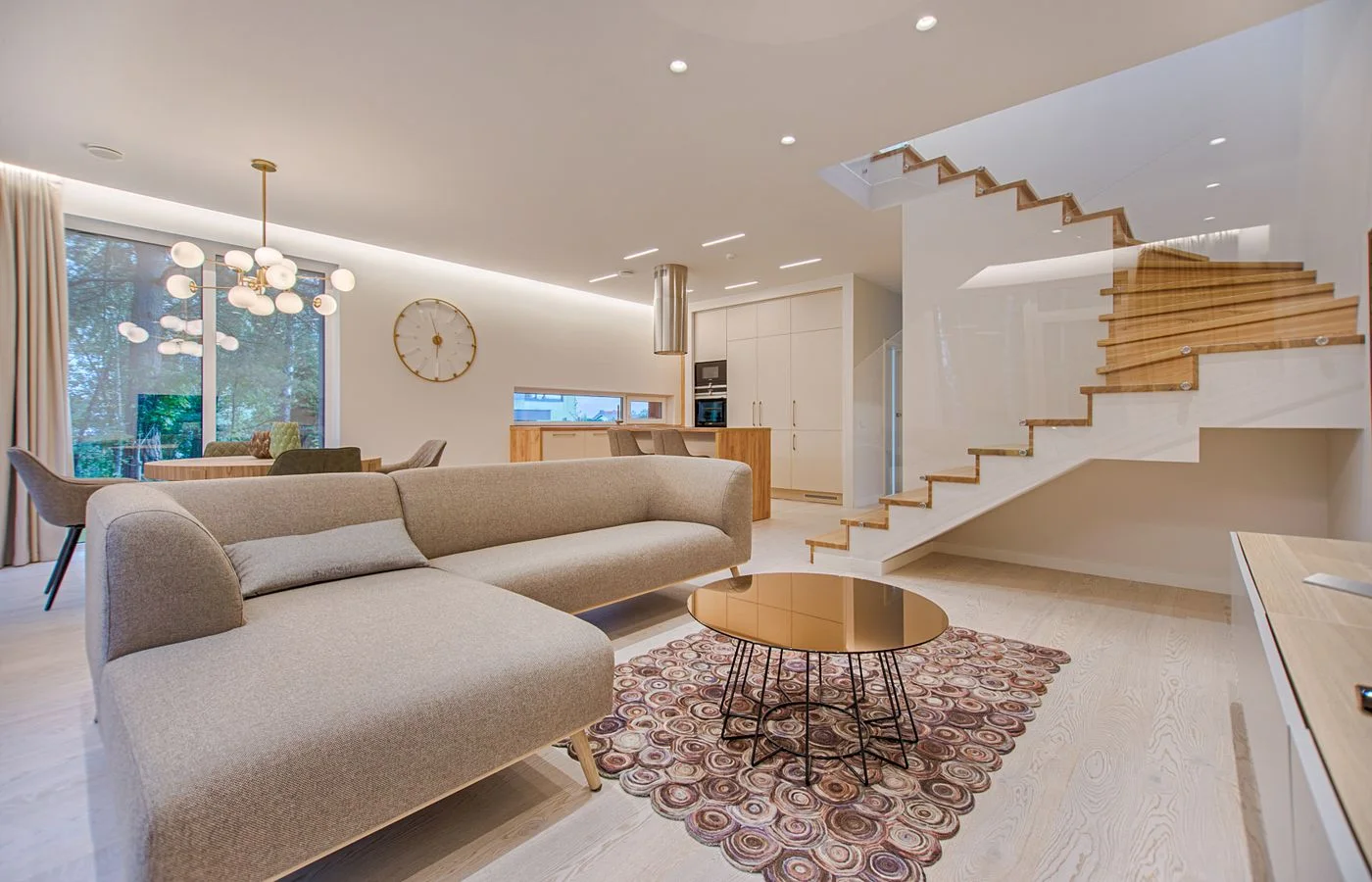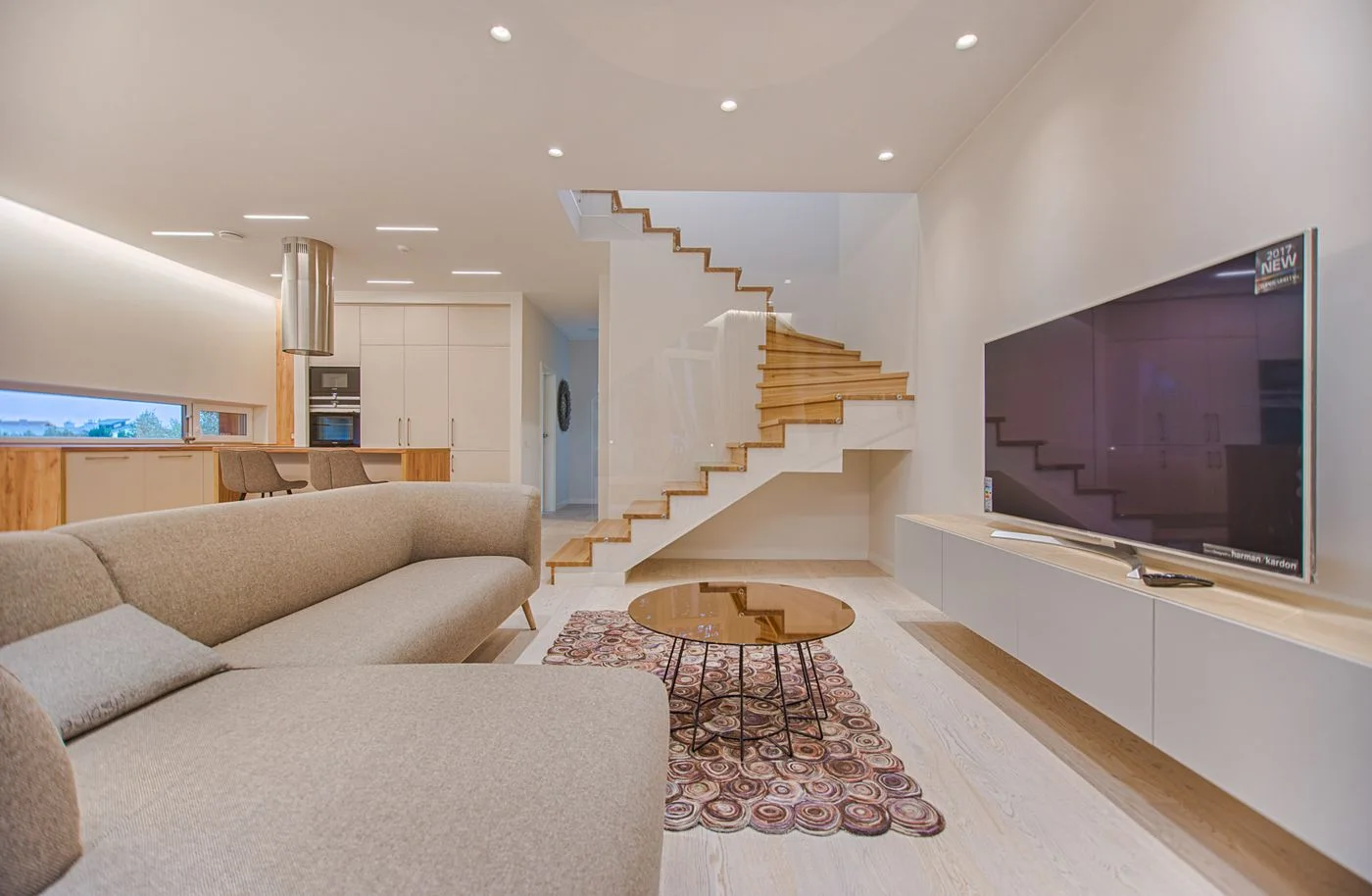
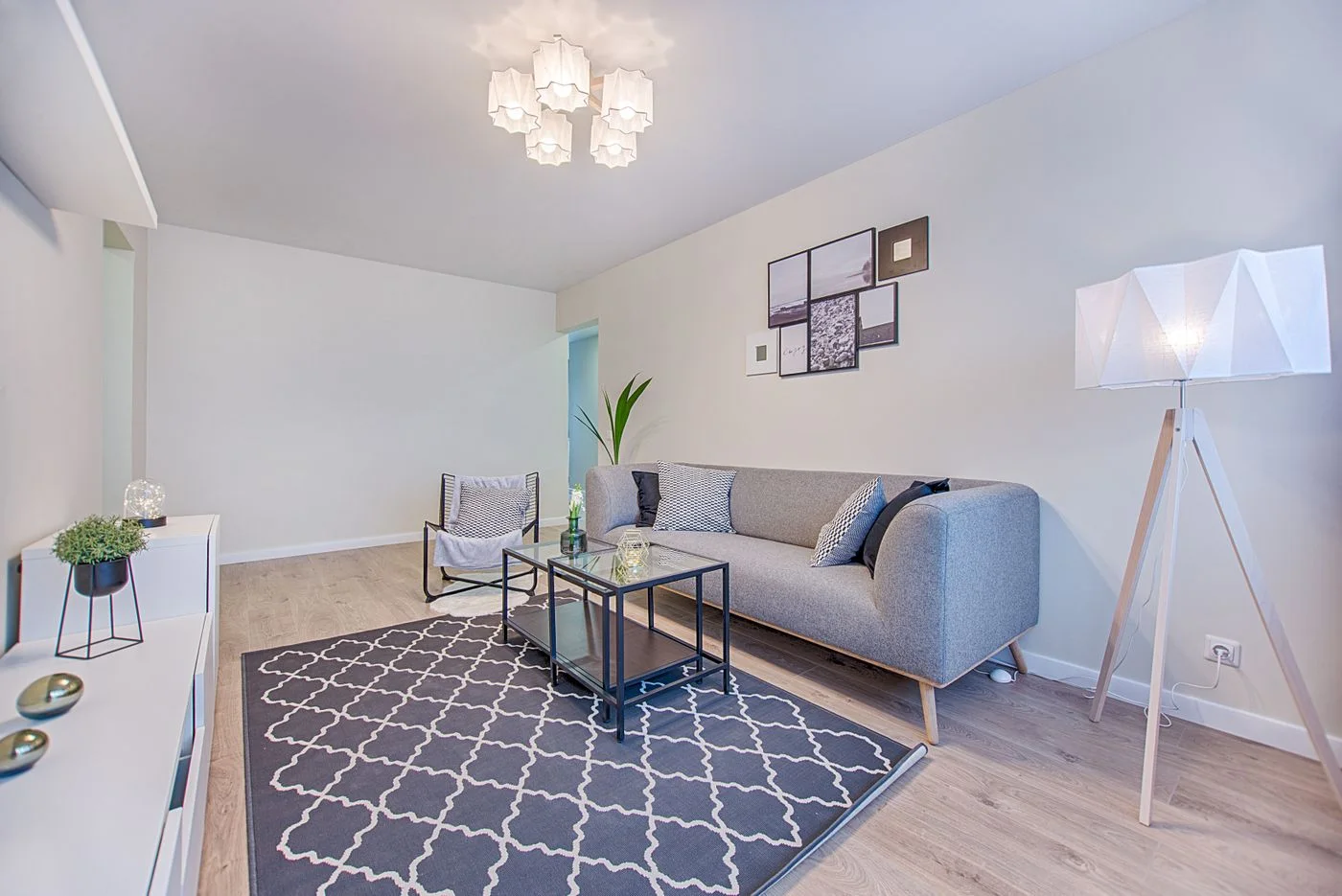
One ceiling light can illuminate a room without making it comfortable. Consider an evening when one person reads on the sofa while someone else watches a film and a visitor sits near the window. Those activities call for different light in different places. Layered lighting simply gives the room useful choices. It need not involve a collection of expensive fittings or an elaborate control system. Start with where light is needed, decide which lamps can provide it safely and conveniently, then choose finishes that sit comfortably with the furniture already in the room. The best arrangement also makes switching between activities straightforward.
In this guide
Plan from activities, not matching lamp setsLook at shades as carefully as basesControl glare around the televisionMake switches and cables easy to live withChoose the smallest useful set of purchasesCompare your optionsBefore you buyCommon questionsPlan from activities, not matching lamp sets
Make a short list of what happens in each seat. Reading, knitting or completing a puzzle usually needs more directed light than conversation. A lamp placed only for symmetry may leave the actual task in shadow. Sit in the relevant chair and identify a practical position beside or behind it, checking that the shade or bulb will not sit directly in your normal line of sight.
Next consider the room's general atmosphere. A ceiling fitting may provide useful light for tidying, while table lamps can make separate corners feel welcoming in the evening. These roles can overlap, so you do not need one new fitting for every label in a lighting guide. Try repositioning an existing lamp before purchasing another. A small shift can reveal whether the problem is insufficient light, glare or simply the wrong placement.
Look at shades as carefully as bases
An opaque shade directs light differently from a translucent fabric one. A reading lamp with an adjustable head can concentrate light where needed, while a shaded table lamp may spread a softer glow through a seating area. Neither is automatically better. Ask what the lamp must do first, then compare its shade, adjustment and bulb guidance. A beautiful sculptural base is not useful if the resulting light falls behind the reader.
Check proportions beside your actual furniture. A small lamp can disappear next to a high-backed sofa, whereas a broad shade may overhang a narrow side table. Tape the shade's approximate width on paper and compare it with the available surface. Leave space for a glass or book if the table performs both jobs. Include the lamp's total height rather than relying on a photograph cropped above the base.
Control glare around the television
Sit in every main seat with the television off and observe which lamps appear as reflections. Repositioning a lamp may be enough to reduce distraction. Avoid choosing an exposed bright bulb simply because it looks appealing in a product image. A shade that conceals the source from seated eye level can be more comfortable. The result depends on the room, the television surface and your viewing angle, so test the arrangement at home.
If different household members prefer different brightness levels, adjustable lamps or compatible dimming can offer flexibility. Verify compatibility between the lamp, bulb and any dimmer before ordering. A dimmable bulb does not guarantee that every fitting or wall control supports it. Avoid making electrical changes beyond your competence; use an appropriately qualified electrician where installation is required. Portable lamps may solve the design problem without changing the permanent fitting.
Make switches and cables easy to live with
Imagine arriving with a cup of tea and switching on the room. A switch hidden behind a heavy sofa makes a lovely lamp irritating to use. Check where each control sits and whether someone with reduced reach can operate it. If you use timers or smart plugs, choose products suitable for the lamp and follow their instructions. Convenience should support a simple routine, not depend on everyone having a particular phone.
Trace cables to sockets before buying. Do not create a lead across a doorway or main walking route to achieve an attractive arrangement. Position the furniture and lamp together, allowing enough slack for ordinary use without leaving loose loops where feet can catch. A cordless lamp may suit a specific occasional position, but charging requirements and runtime deserve consideration. It is not a universal replacement for a well-positioned socket.
Choose the smallest useful set of purchases
Start with one genuinely useful reading lamp and one light that improves the evening atmosphere. Live with those positions before filling every corner. Compare replacement bulb availability, the ease of cleaning the shade and the stability of the base. In a home with children or pets, think about where a fitting may be knocked and follow the manufacturer's placement guidance. A tall narrow lamp next to a busy route needs particular scrutiny.
Keep the finishes related without requiring an exact match. A timber base can echo a coffee table; a pale shade can relate to curtains. The light itself should remain the main buying criterion. If the budget is limited, spend on a fitting that addresses a daily frustration rather than a decorative duplicate. A room with a few well-used lamps often feels more settled than one with many attractive fittings that are rarely switched on.
Compare your options
| Option | Best for | The trade-off |
|---|---|---|
| Adjustable reading lamp | A regular reading or craft seat | A more purposeful visual presence |
| Shaded table lamp | Gentle light near conversational seating | May need separate task lighting |
| Floor lamp | A corner without a spare table | Needs a stable footprint and safe cable route |
Before you buy
- List activities in each main seat.
- Check glare from seated eye level.
- Measure shade width and overall height.
- Verify bulb and dimmer compatibility.
- Plan switches and cables before ordering.
Common questions
Must every lamp have the same finish?
No. Repeating one or two materials usually provides enough connection. Compare the lamps in the context of the whole room rather than purchasing a matching set without checking their functions.
Should I buy smart lighting first?
Begin with suitable placement and comfortable light. Smart controls can add convenience, but they cannot compensate for glare, an undersized shade or a lamp that stands in the wrong place.
Useful sources & shopping starting points
Use the retailer's current measurements, care information and delivery terms to check any shortlisted item. Availability and prices can change.