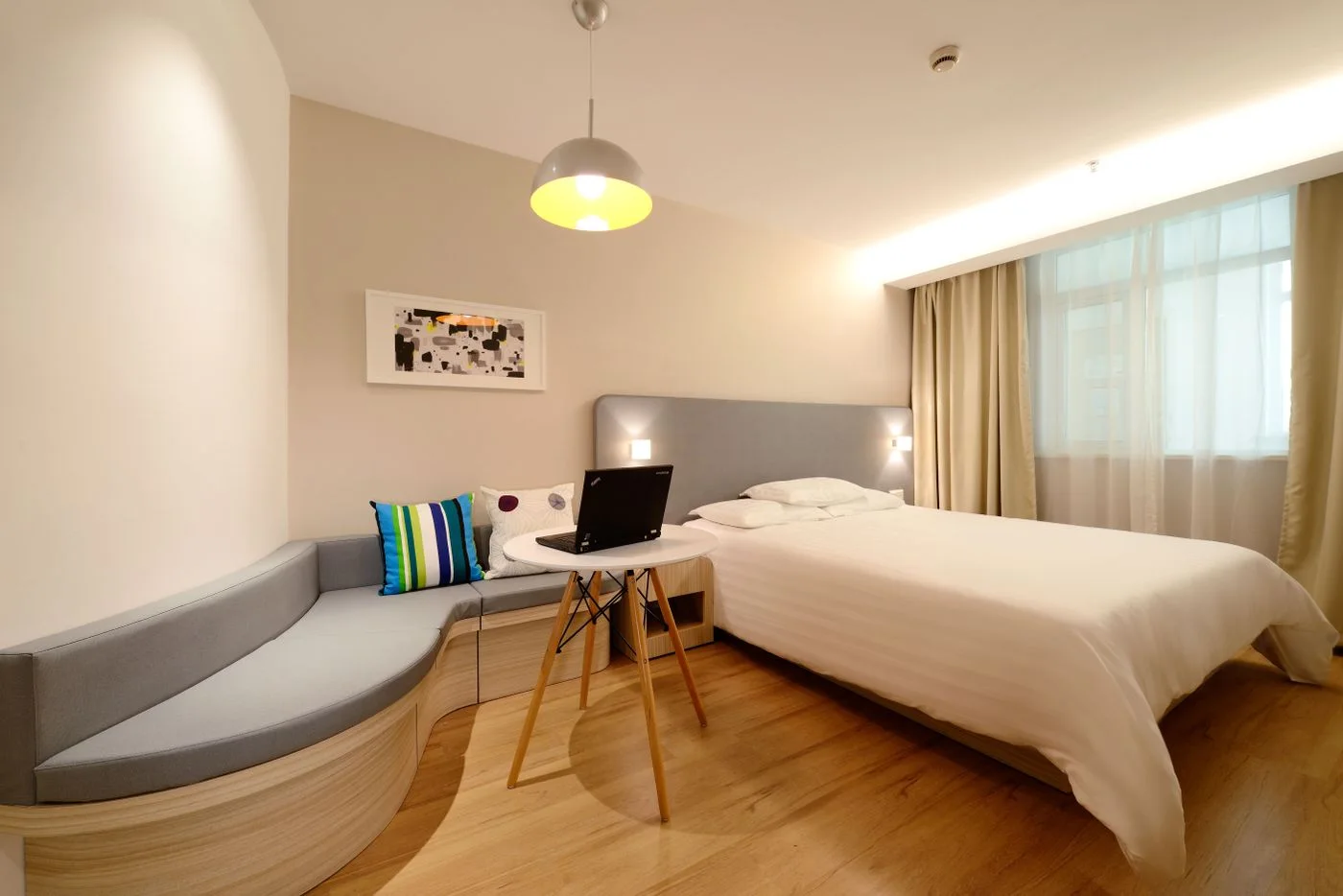

A bedroom window may face a streetlight, a neighbour's landing or the first light of a summer morning. Curtains have to respond to those conditions as well as complement the bedding. Imagine a room where the existing pair looks attractive when closed but leaves the window partly covered during the day and bunches against a radiator at night. The solution begins with the window's practical constraints. Consider privacy, how much light you want to exclude, the available fitting space and how often the curtains will move. Fabric colour comes after those decisions, when the shortlist is already useful. A deliberate plan prevents costly changes after the fabric arrives.
In this guide
Separate privacy from light exclusionMeasure the fitting, not just the glassChoose a length that supports the room's routineCompare headings and fabric weightCompare the complete purchaseCompare your optionsBefore you buyCommon questionsSeparate privacy from light exclusion
Daytime privacy and a darker room at night are different needs. A sheer layer may soften views into a room in daylight, but do not assume it provides the same privacy after dark when interior lights are on. Check the actual sightlines from accessible outside positions. A lined curtain or suitable blind may be needed for evening privacy. Layering can work well, provided both treatments can operate freely and there is enough fitting depth.
Blackout lining can help reduce light passing through the fabric, yet light may still enter at the sides and top. Consider the whole installation rather than expecting a label to guarantee a completely dark room. Decide how much darkness you personally need and inspect gaps around the existing fitting. For a room facing strong exterior light, a combination of treatments may be worth comparing with curtains alone. Measure carefully before paying for a more complicated arrangement.
Measure the fitting, not just the glass
Curtain width and drop depend on the pole or track, heading and chosen finish. Follow the retailer's measuring instructions for the exact product. Measuring only the window glass can produce curtains that are too narrow or too short. Note the available space above the window and to either side, and check whether the wall or ceiling can support the proposed fitting with appropriate fixings.
Think about the curtains when open. Enough space to stack fabric outside the glass can preserve more daylight, but neighbouring furniture or a narrow wall return may limit that option. Check wardrobes and bedside tables against the open curtain position. In an awkward bay, a standard straight pole may not be appropriate. Compare suitable track systems and professional measuring services where the geometry is complex, rather than making assumptions from a single front-facing measurement.
Choose a length that supports the room's routine
Floor-length curtains can give a bedroom a settled appearance, but the hem should suit cleaning, furniture and any heat source. Fabric pooling on the floor is a stylistic choice that introduces extra handling and dust collection. In a small room, a practical near-floor finish may be easier to live with. Measure in several places if the floor is uneven and follow the chosen supplier's guidance on the final drop.
Where a radiator sits beneath the window, consider how the treatment interacts with it and follow relevant fitting and heating guidance. A shorter curtain or separate blind may suit the arrangement better than heavy fabric gathered around the radiator. Avoid choosing a length solely because it is available ready-made. Alteration costs can be reasonable compared with living with a hem that catches on furniture every day, but obtain the full cost before purchasing.
Compare headings and fabric weight
The heading changes the appearance and how fabric stacks. Some styles create a more structured line, while others feel relaxed. Check compatibility with the existing pole or track and the hooks or rings required. A large eyelet heading cannot simply be attached to every fitting. If curtains will open and close daily, consider the ease of movement and whether the user can reach and operate them comfortably.
Ask for fabric samples and compare them against the wall, bedding and floor. A large curtain surface can make a colour more prominent than it appears in a small online image. Examine texture in both daylight and lamplight, and read the cleaning instructions. Heavy fabric may look luxurious but require stronger fittings and more involved care. A simpler fabric with appropriate lining can be a more practical choice for a frequently used room.
Compare the complete purchase
Ready-made curtains can offer a straightforward route when standard dimensions suit the room. Made-to-measure options may be helpful for unusual windows or a precise finish, but check the measuring process and cancellation or return terms before ordering. Include poles, tracks, fitting, lining and alterations when comparing costs. A cheaper pair with several necessary extras may not be the lower-cost solution.
Before finalising, rehearse the daily routine: opening the curtains from the bed, accessing a window handle and closing them without moving a chair. Consider child safety for any cords or chains in layered window treatments and follow the product instructions. Keep the room's visual scheme simple if the window dressing is substantial. A well-proportioned, easy-to-use curtain can provide both the practical function and much of the room's decorative softness.
Compare your options
| Option | Best for | The trade-off |
|---|---|---|
| Ready-made lined curtains | Standard windows and a straightforward budget | May need alteration or compromise on dimensions |
| Made-to-measure curtains | Unusual sizes or a precise finish | Careful measuring and order terms matter |
| Curtains with a separate blind | Different daytime and night-time needs | More fittings and operating parts |
Before you buy
- List privacy and light requirements separately.
- Measure using the exact supplier's guidance.
- Check curtain stack space and furniture clearance.
- Include lining, hardware and alterations in the cost.
- Review cleaning and child-safety instructions.
Common questions
Do blackout curtains guarantee complete darkness?
The lining addresses light through the fabric, while the installation determines gaps around it. Check side and top coverage as well as the material, particularly if a streetlight directly faces the window.
Should bedroom curtains match the duvet cover?
They can relate without matching. Since bedding may change more often, a curtain that works with the walls and furniture can offer greater flexibility over time.
Useful sources & shopping starting points
Use the retailer's current measurements, care information and delivery terms to check any shortlisted item. Availability and prices can change.